
Invisible
You can’t see which agents are running, on which machines, or what they’re connected to.
The control plane for AI agents
RayShield Aegis sits between the AI agents your teams run and your infrastructure. Each agent reaches only what its role allows. The controls sit below the agent, where it can’t see or switch them off, and every action leaves a tamper-evident record.
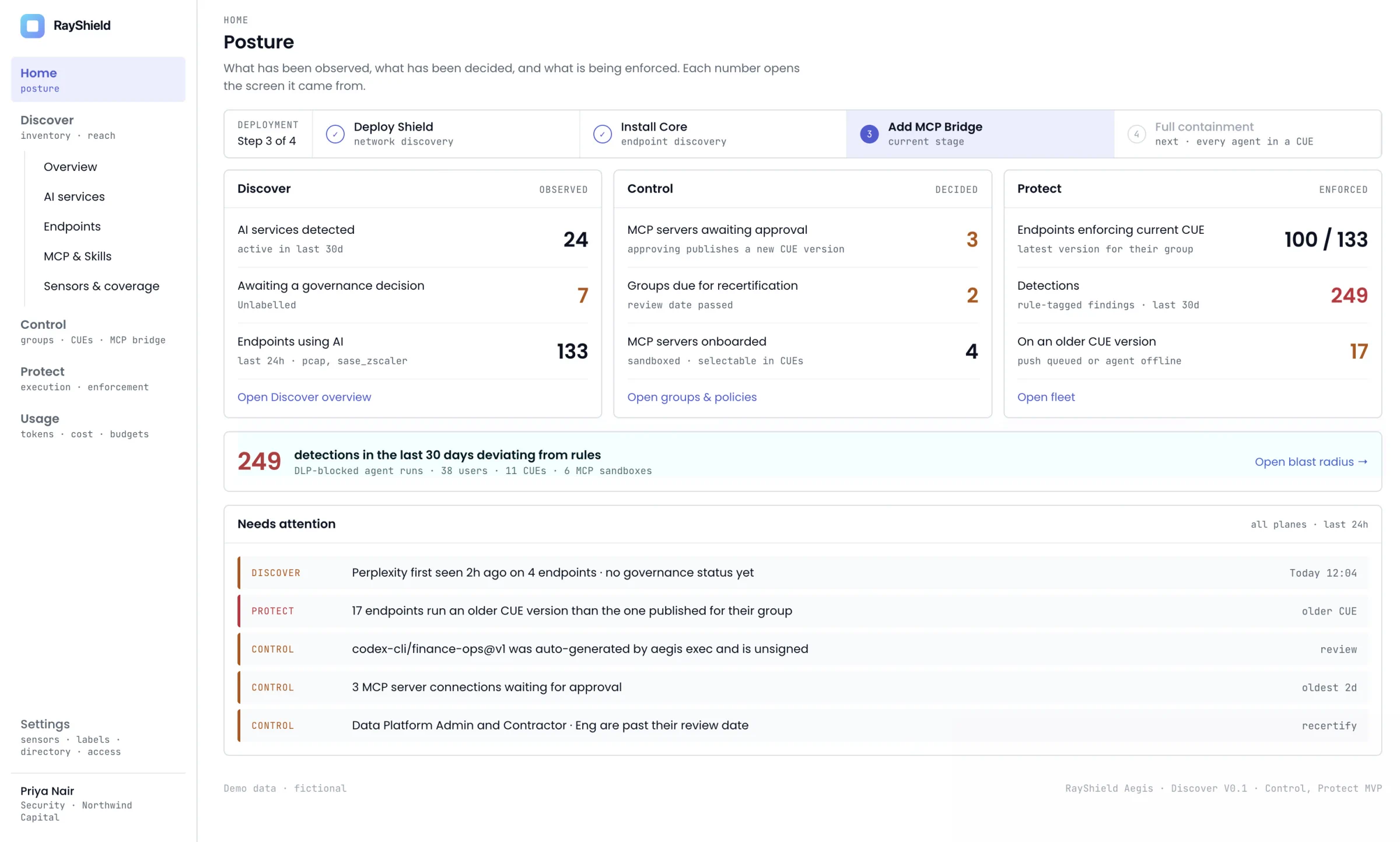
Built with design partners across four industries
RayShield Aegis is being shaped alongside security teams at:
Already happening
Developers across your company are running AI agents today. Those agents read code, call APIs, install packages and connect to tools, all with the developer’s own permissions. An agent has a goal, not a conscience. It will use every key, file and connection within reach to finish the job. Most security tools were built to watch people. Agents need something that controls them.
You can’t see which agents are running, on which machines, or what they’re connected to.
Agents inherit the full access of the person running them, including secrets they never needed.
When something goes wrong, there’s no trustworthy record of what the agent actually did.
Invisible
One control plane
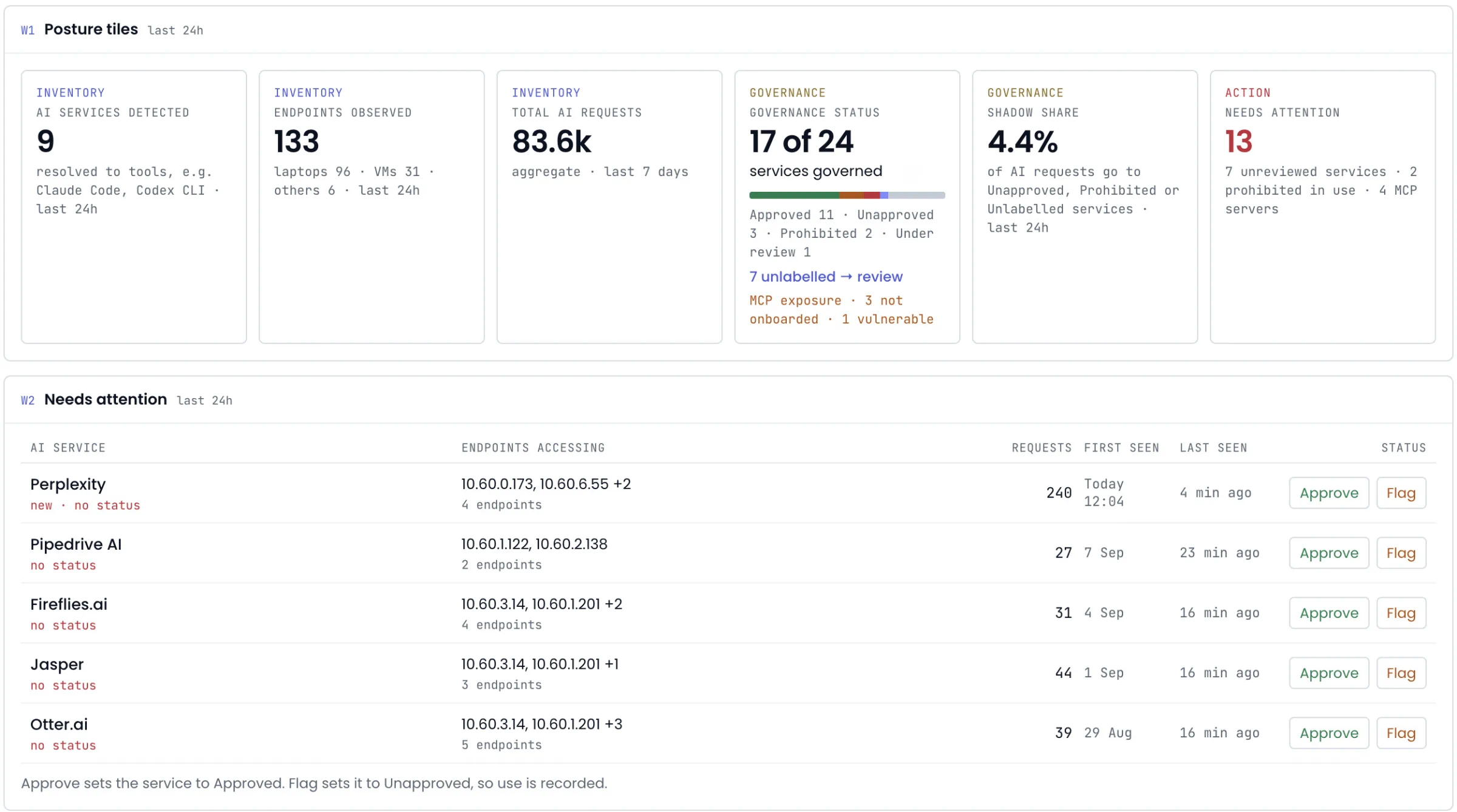
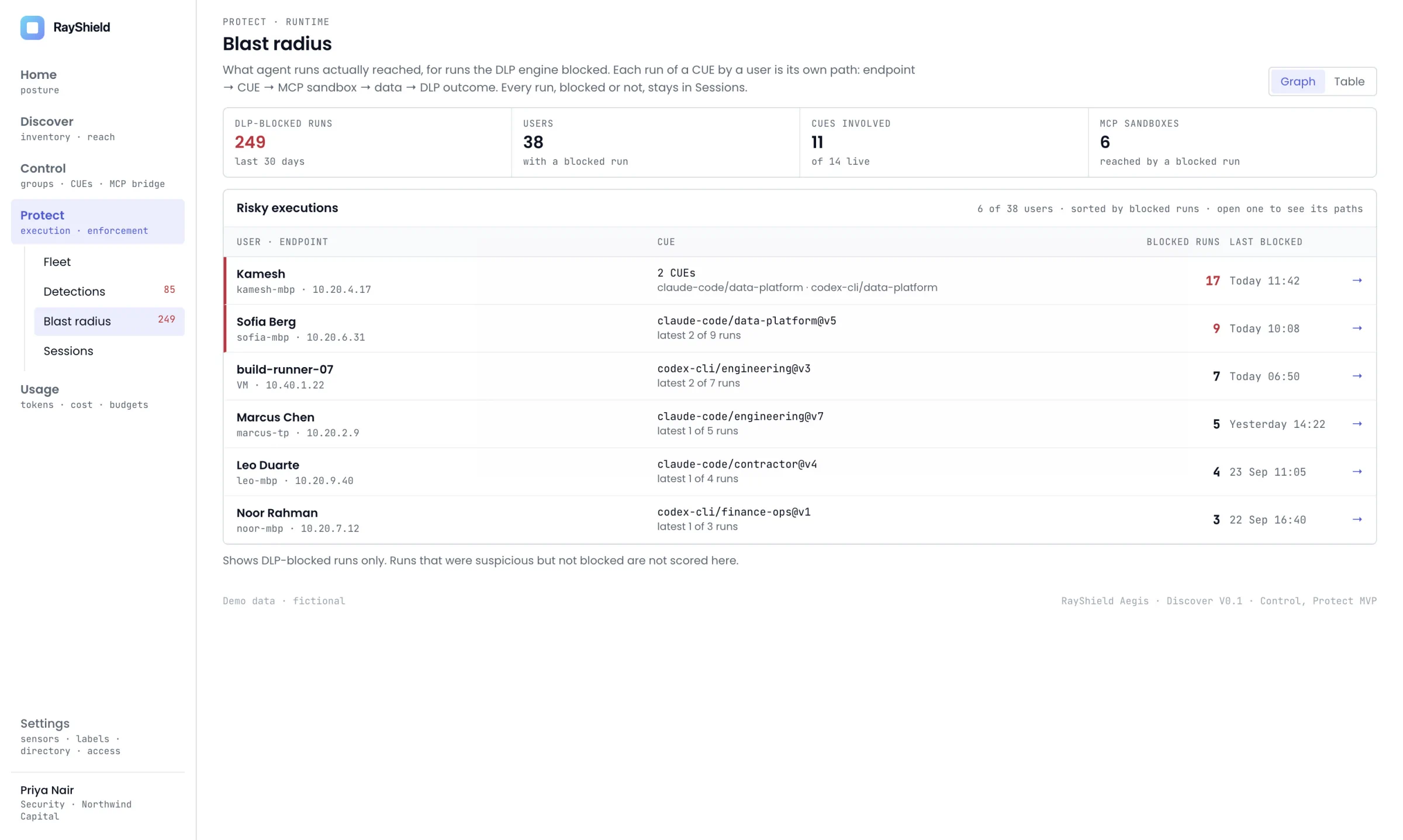
Find every AI tool and agent running across your laptops and servers, and see what each one could reach before it does anything.
Run agents in a sealed environment that allows only the connections, files and tools their policy grants. Everything else is blocked, every time.
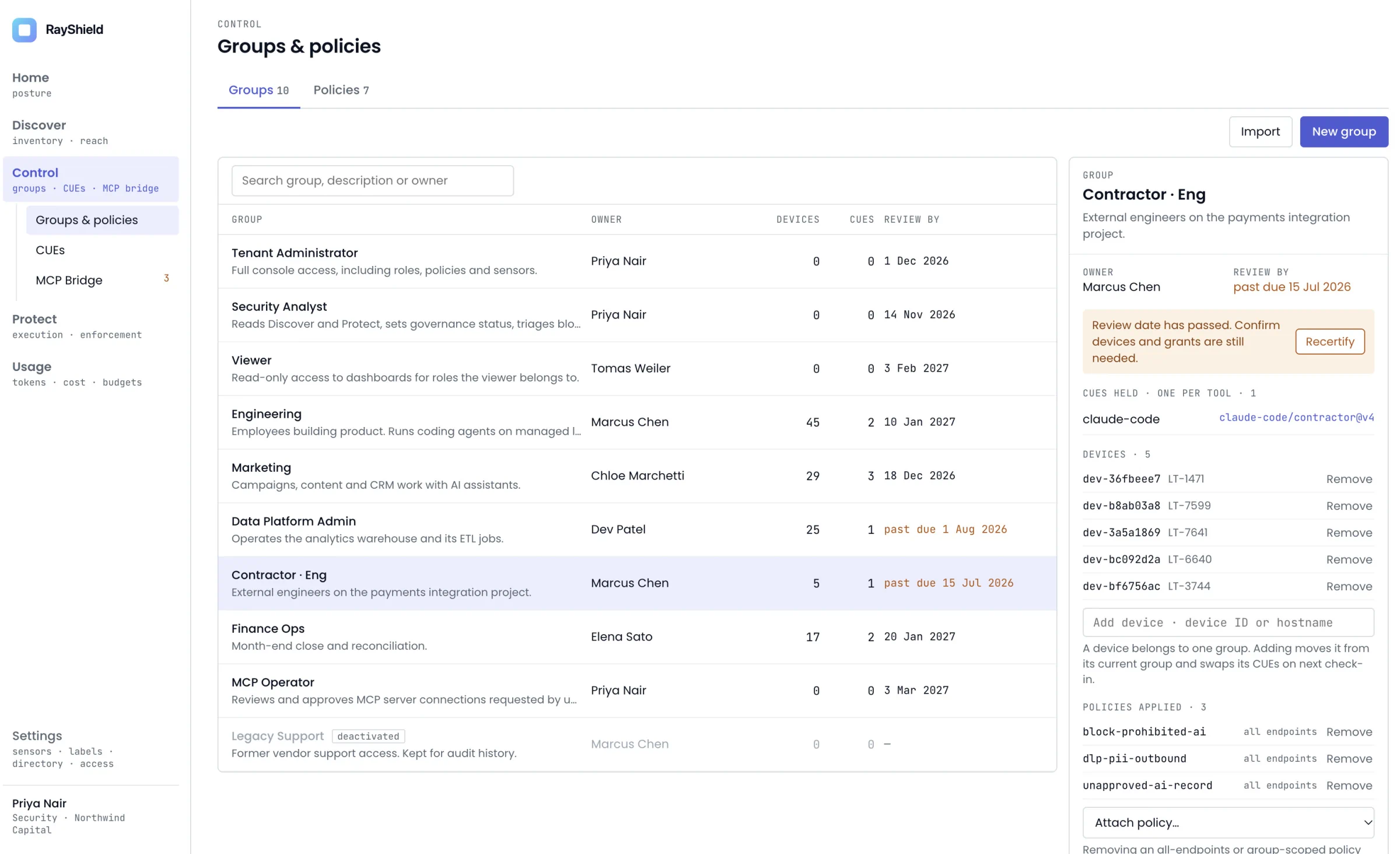
Assign policies by user, team or role. Approve new tools. Watch activity and alerts across your whole fleet from one console.
Discover
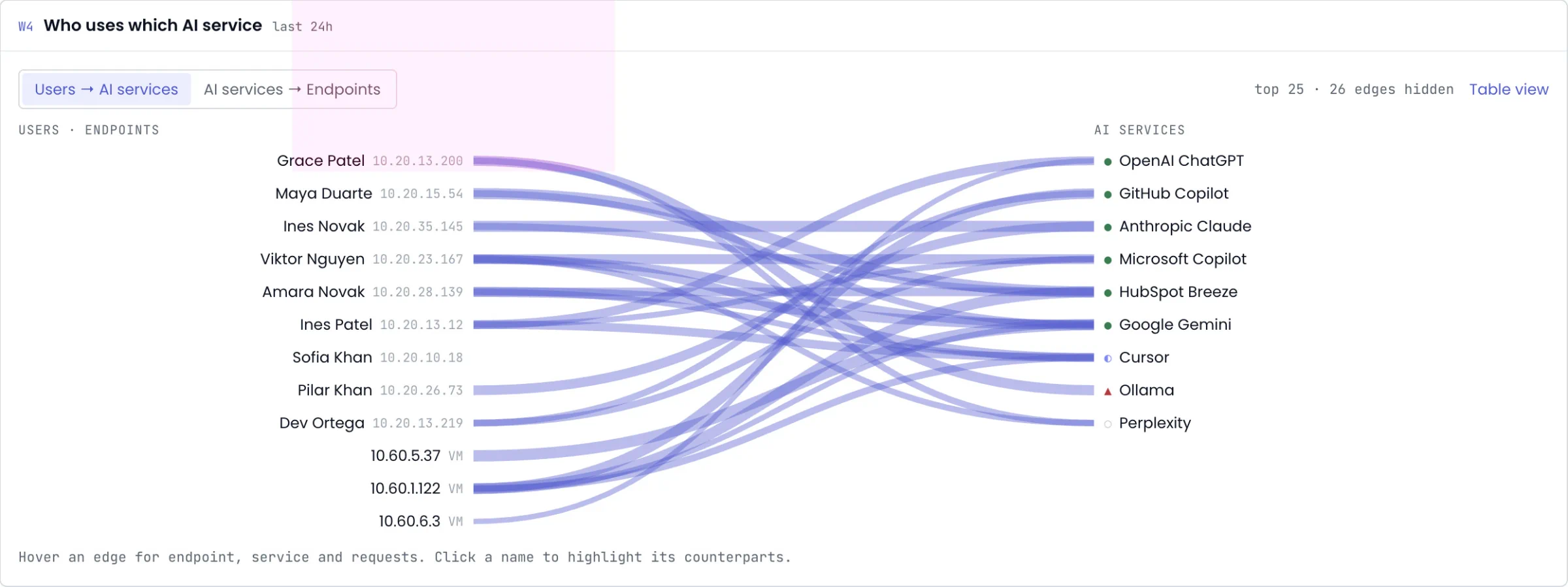
Govern
Install Aegis on every laptop or server where agents run.
Each role gets a centrally controlled policy that spells out exactly what its agents may reach.
Developers keep using their usual tools. Aegis wraps each run in an isolated environment that enforces the policy.
Prompts, network activity, commands and detections flow into one console, with tamper-evident logs.
Controls live in the layer beneath the agent’s environment. The agent can’t see them, change them or route around them.
If a connection isn’t in the policy, it’s blocked. No scoring, no ‘probably safe,’ no fallback.
Credentials are supplied at runtime, so the agent never sees the raw key it’s using.
Aegis maps what an agent could reach without executing anything.
Laptops, servers, cloud VMs or plain Python. One policy works the same everywhere.
Deterministic, not a guess · Agents never hold your real secrets
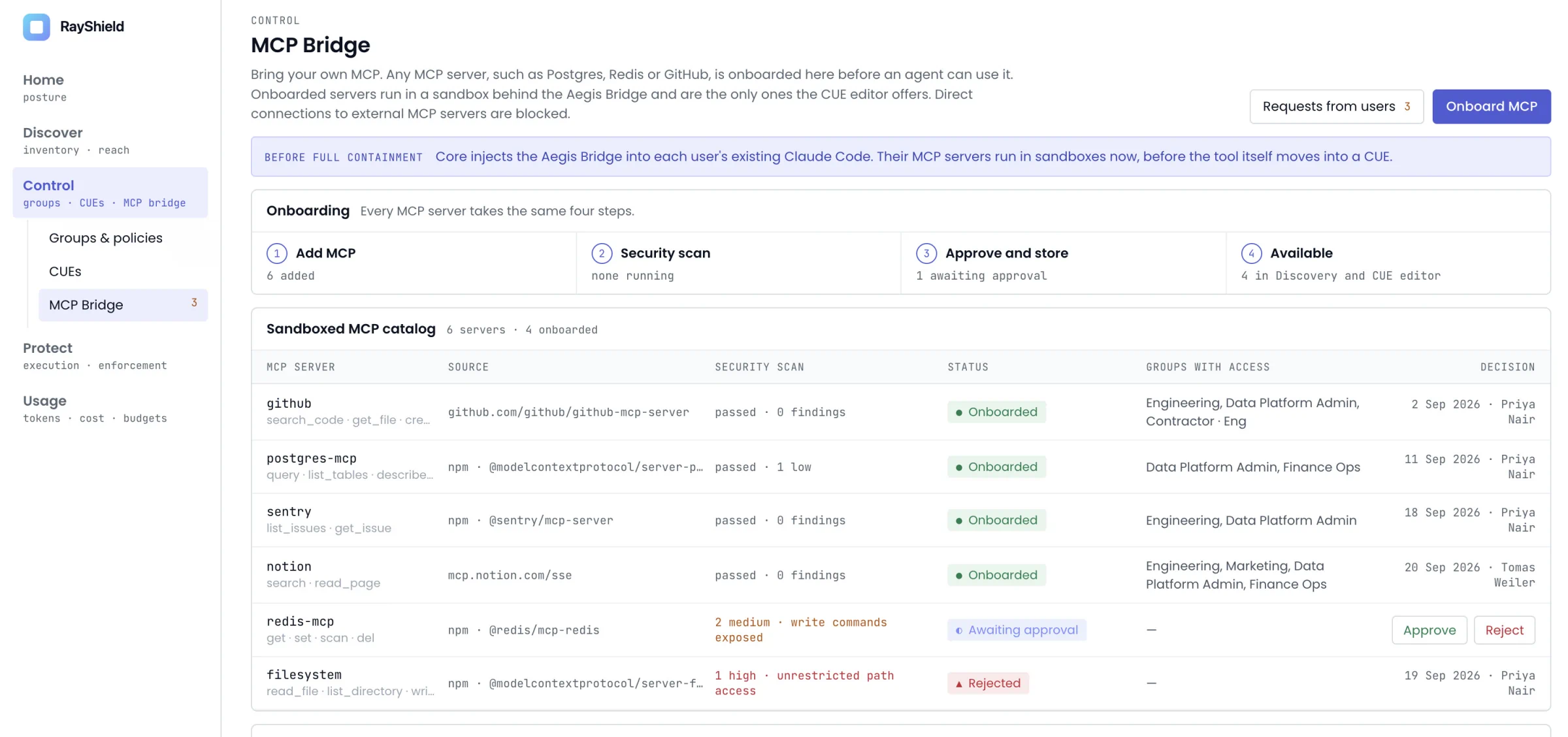
Know the blast radius before you run
Built with, not just for
Ride-hailing, retail, banking and logistics all run on sensitive data, real money and systems that can’t go down. Each design partner has developers already using AI agents. They’re helping us build the control plane they need.
Controlling coding agents across a large engineering organisation that handles rider, driver and payment data.
Read moreKeeping customer and payment data out of reach of AI agents across thousands of developers and hundreds of systems.
Read moreGiving regulators a clear, provable answer to how AI agents are controlled.
Read moreLetting agents work with operational systems and partner APIs without exposing shipment and customer data.
Read moreShow me what needs my attention, let me act on it, and prove nothing was tampered with.
Read moreA defensible view of agent risk across the whole company, ready for the board and the regulator.
Read moreKeep using Claude Code, Gemini CLI or Cursor CLI exactly as you do today, without becoming the security risk.
Read moreSecurity buyers have heard enough ‘AI-powered, fully protected.’ We say what Aegis enforces, how, and where its protection ends. If an agent runs outside Aegis, we tell you it’s there. We don’t pretend it’s covered.
See RayShield Aegis on your own agents in a 30-minute demo.